2nd Edition

Objectives

  • Provide fundamental knowledge in the interdisciplinary field of Human-Animal Studies, thereby contributing to the development and consolidation of this scientific field in Portugal.
  • Provide a distinctive educational offering within the higher education landscape in Portugal, by focusing on the study of human-animal relationships from a social sciences perspective.

  •  Contribute to the implementation of Human-Animal Studies in Portugal, as outlined in ICS-ULisboa's application to the Animals and Society Institute's International Development Fund in 2019.

Knowledge acquired

By the end of this course, students should be able to: identify the main analytical axes of Human-Animal Studies, its main theoretical-methodological paradigms, theories, and concepts; understand the main multispecies methodologies and discuss their advantages and limitations; identify and discuss the main areas in which human/non-human relationships are constructed, with impacts on all species (health, environment, politics, law, ethics, private life, media and symbolic representations, art, literature, among others), in various contexts (rural/urban, wild/domestic; family and personal life; food consumption; other types of consumption; entertainment and leisure; among others); know how to critically question the situation of non-human animals, their living conditions and well-being, placing them in the context of power relations with other species, human and non-human; know how to reflect creatively on how to apply this knowledge to their professional practice, particularly in contact with non-human species.

Who is this course for?

This postgraduate course is for candidates from a wide range of fields who are interested in studying the relationships between humans and non-human animals. Candidates who work directly in the field of human-animal relations, or whose activities and interests intersect with the subject matter, are also welcome: lawyers, health professionals, social workers, public administrators, NGO agents, animal advocacy organizations, etc.


Qualifications for applicants

Candidates must have a university degree, with various fields of study being accepted, given the interdisciplinary nature of Human-Animal Studies. Candidates with degrees in Social Sciences and Humanities (Sociology, Geography, History, Anthropology, Social Work, Literature, Psychology, Philosophy, Law, etc.) or other disciplines that establish a connection with the study of human-animal relations (Biology, Veterinary Sciences, etc.) will be accepted.

Duration

1 Semester

Dates

20th September to 31st January
2022 - 2023

Schedules

Tuesdays and Thursdays
6 p.m. to 8 p.m.

Online Format

Zoom Platform

Credits

30 ECTs

2ª fase de Candidaturas Aberta até 26 de Agosto

OPENING SESSION

Maria Esther Maciel

Federal University of Minas Gerais, Brazil

Zooliterature and Animal Subjectivity

The lecture addresses, from a transdisciplinary perspective, the contemporary concept of zooliterature, linked to the issue of animal subjectivity. The purpose is to show how some modern and contemporary writers, contrary to the anthropocentric humanist thinking of the West, have conferred on non-human animals the status of subjects endowed with intelligence, sensitivity, and imagination, as well as points of view on humanity. Emphasis will be given to dogs, oxen, and bears transformed into protagonists/narrators of modern and contemporary fictional texts. The theoretical framework includes reflections in the fields of philosophy, ethology, anthropology, and literary theory. 

Recording (Youtube)

Bio

Professor of Comparative Literature at UFMG, she is a collaborating professor of Literary Theory in the Graduate Program in Literary Theory and History at UNICAMP. She holds a PhD in Comparative Literature from UFMG and a postdoctorate in cinema from the University of London. She is also a researcher at CNPq and a writer, with several works of essays, poetry, fiction, and chronicles. Among her publications are the books A memória das coisas – ensaios de literatura, cinema e artes plásticas (2004), O livro dos nomes (2009), Animais escritos – um olhar sobre a zooliteratura contemporânea (2008), Pensar/escrever o animal (org. 2011), Literatura e animalidade (2016) and Pequena enciclopédia de seres comuns (2021). She is the creator and editorial director of the magazine Olympio - Literature and art.

STUDY PLAN

OPEN SESSION Zooliterature and Animal Subjectivity

Speaker: Maria Esther Maciel (Universidade Federal de Minas Gerais, Brasil)


Session 2: Apresentação. Definição do campo: human-animal studies, animal studies, critical animal studies e anthrozoology

Teacher: Verónica Policarpo (ICS-ULisboa)


Session 3: Conceitos-chave e Teorias em Human-Animal Studies: Uma Análise Crítica

Teacher: Teresa Líbano Monteiro (ICS-ULisboa)


Session 4: Metodologias Multiespécies

Teacher: Verónica Policarpo (ICS-ULisboa)

Session 5: Crianças e Animais: A relação entre humanos e não-humanos na infância

Teacher: Teresa Líbano Monteiro (ICS-ULisboa)


Session 6: Animais de companhia, desigualdades sociais e diferentes formas de inserção dos animais nas famílias

Teacher: Teresa Líbano Monteiro (ICS-ULisboa)


Session 7: Animais para a saúde humana e inclusão Social

Teacher: Joana Catela (ICS-ULisboa)


Session 8: Animais em contexto de catástrofe

Teacher: Verónica Policarpo (ICS-ULisboa)

Session 9: Nova história natural: narrativas e experiências de renaturalização

Teacher: Guilherme de Sá (Universidade de Brasília, Brasil)


Session 10: Biopolítica da conservação e geografias mais-que-humanas

 Teacher: Filipa Soares (ICS-ULisboa)


Session 11: Animais que vivem na natureza e conservação da vida selvagem – Os casos do lobo ibérico e das tartarugas marinhas

Docentes: Francisco Petrucci-Fonseca (FC-ULisboa) & Juan Patino Martinez (FMB, Cabo Verde)


Session 12: Urbanizando os Animais, ou o conforto da natureza

Teacher: Andrea Pavoni (DINÂMIA-IUL)

Session 13: Animais para o consumo humano: refeições, carne.

Docentes: Monica Truninger & João Graça (ICS-ULisboa)


Session 14: Animais entre o rural e o urbano: atitudes e práticas de maneio, abate e consumo

Teacher: Rui Pedro Fonseca (CIES-IUL)


Session 15: Animais e experimentação na investigação clínica

Teacher: Ricardo R. Santos (ISAMB, FM-ULisboa)


Session 16: Animais para entretenimento humano: exibição e performance

Teacher: Leonor Galhardo (Independent Scholar)

Session 17: Nisto Junt@s: Emaranhamentos Humano-Animais nas Culturas e Literaturas Anglófonas

Teacher: Sofia Biscaia (University of Aveiro)


Session 18: Descolonizando estudos críticos dos animais: Joaquim Maria Machado de Assis e João Guimarães Rosa

Teacher: Alexandra Isfahani-Hammond (University of San Diego, Califórnia)


Session 19: A representação dos animais no jornalismo

Teacher: Eveline Baptistella (University of Mato Grosso)


Session 20: Animais na Era Digital e nas redes sociais

Teacher: Jussara Rowland (ICS-ULisboa)

Session 21: A politização da questão animal

Teacher: Viriato Soromenho Marques (FL-ULisboa)


Session 22: Associativismo e Movimentos de Proteção Animal

Teacher: Breno Vilela (State University of Paraíba)


Session 23: A saliência da causa animal na vida política: partidos e eleitores

Teacher: Sofia Serra-Silva (ICS-ULisboa)

Session 24: Animais de companhia: bem-estar, qualidade de vida e envelhecimento

Teacher: Lisa Mestrinho (FMV-ULisboa)


Session 25: Cuidar de um animal de companhia: doença, velhice e morte

Teacher: Kênia Mara Gaedtke (Instituto Federal de Santa Catarina, Brasil)


Session 26: Práticas e Rituais de luto por animais

Teacher: Verónica Policarpo (ICS-ULisboa) & Ricardo R. Santos (ISAMB, FM-ULisboa)


Session 27: Riscos globais, saúde e ambiente

Teacher: Ricardo R. Santos (ISAMB, FM-ULisboa) & Brandão Rodrigues (The Donkey Sanctuary)

Session 28: Direitos dos Animais: Dos Princípios Éticos à Consagração no Código Civil

Teacher: Fernando Araújo (FD-ULisboa)


Session 29: O Quadro Legal e Regulamentar Básico do Direito dos Animais em Portugal

Teacher: Inês Real (FD-ULisboa)


Session 30: A Proteção Penal dos Direitos dos Animais, na Lei e nos Tribunais

Teacher: Alexandra Reis Moreira (FD-ULisboa)

Completion of a final essay, between 5,000 and 7,000 words, in Portuguese or English, on one of the topics discussed during the course, and framed within one or more modules.

Teaching team

Perfil_2

Verónica Policarpo (Coordinator)

ICS-ULisboa

Verónica is a senior researcher at the Institute of Social Sciences of the University of Lisboa (ICS-ULisboa), in the field of Human-Animal Studies. Her current research interests are focused on human-animal relationships and the construction of daily practices and bonds between human and non-human animals. She is interested in a more-than-human approach in which all living beings are considered as active collaborators in the co-construction of shared worlds. In 2022 Verónica was granted with an ERC Consolidator Grant to develop the project ABIDE – Animal Abidings: recovering from disasters in more-than-human communities (ERC, ABIDE, Grant agreement ID: 101043231, 2023-2028) . At ICS-ULisboa, Verónica coordinates, within this field of studies: the Human-Animal Studies Hub, with the support of the Animals & Society Institute and its International Development Award; the post-graduate course “Animais e Sociedade”; the “Animal Wonder – Reading Group on Human-Animal Studies; and the Webinar “The Post-Human Animal”. Previous projects addressed the media coverage of the situation of animals in disasters (“Liminal Becomings: reframing human-animal relationships in disasters” (CEECIND/02719/2017); and the relationships between children and companion animals ( “CLAN – Children-Animal’s Friendships: challenging boundaries between humans and non-humans in contemporary societies” (PTDC/SOC 28415/2017). Link: https://www.ics.ulisboa.pt/en/pessoa/veronica-policarpo ORCID: http://orcid.org/0000-0002-9245-1057 CIÊNCIA VITAE: https://www.cienciavitae.pt//C211-DB67-6F6F Twitter: @VMPolicarpo

foto-teresa-site

Teresa Líbano Monteiro

ICS-ULisboa

PhD in Sociology (ISCTE-IUL) (2007). She taught Sociological Theory and Methods of Research at the Faculty of Human Sciences of the Portuguese Catholic University (1993-2017). In 2013, she went to the Centre Max Weber (Lyon- France) to further developed Human-Animal Studies.

E8C845A0-43F5-401E-8181-353329E8D584-01

Joana Catela

ICS-ULisboa

Joana Catela studied Social Anthropology at FCSH-Nova and Latin American Studies at the University of Cambridge. Between 2010 and 2011, she completed her postgraduate degree in Health Anthropology: Cultural Competence in Clinical Settings, also at ISCTE-IUL. After a period working for local government, in 2018 she obtained her PhD in Anthropology at ISCTE-IUL with a thesis entitled “On the margins and in transit: mental health and good intentions in an IPSS on the outskirts of Lisbon,” based on intensive fieldwork in a rehousing neighborhood. She was invited to teach the course Anthropology and Development in the first semester of 2018 at the Polytechnic Institute of Leiria.

Between October 2018 and November 2019, Joana Catela joined the third phase, as a postdoctoral researcher at ICS, of the project “exPERts - Organizing planning knowledge: housing policy and the role of experts in the PER” (FCT PTDC/ATP-EUR/4309/2014). Her main research task focused on collecting ethnographic data through observation, participant observation, and semi-structured interviews in two locations selected as case studies—Cascais and Alta de Lisboa—with both former residents of shanty towns and the technicians involved in their rehousing.

Her main research interests focus, among other things, on issues related to urban anthropology, medical anthropology, immigration, mental health, housing, and vulnerability, topics on which she has published and participated in scientific conferences, both nationally and internationally.

guilherme-sa-200x200

Guilherme de Sá

University of Brasília, Brazil

Guilherme José da Silva e Sá holds a master's degree and doctorate in Social Anthropology from the National Museum – Federal University of Rio de Janeiro. He is a professor in the Department of Anthropology at the University of Brasília, where he heads the Laboratory of Anthropology of Science and Technology (LACT). He was a guest researcher at the Laboratoire dAnthropologie Sociale – Collège de France and a visiting researcher at the Institute of Social Sciences – University of Lisbon. He was president of the Brazilian Association for Social Studies of Science and Technology (ESOCITE.BR). He is the author of “No Mesmo Galho: antropologia de coletivos humanos e animais” (On the Same Branch: anthropology of human and animal collectives). Rio de Janeiro: 7Letras, 2013 (Marcel Roche Award, 2014). He works in the areas of Anthropology of Science and Technology; Anthropology of Nature; and relations between humans and non-humans.

Filipa Soares

Filipa Soares

ICS-ULisboa

PhD in Human Geography from the University of Oxford and bachelor's and master's degrees in Anthropology from NOVA FCSH. She is currently a researcher at ICS-ULisboa, working on the project “People and Fire: Reducing risk, living with risk.” She has been working on the relationship between humans and wildlife and the social and biopolitical dimensions of nature conservation and forest management in Portugal and the United Kingdom. 

Francisco Petrucci-Fonseca

FC-ULisboa

Juan Patino Martinez

FMB, Cape Verde

PhD in biological sciences, ecology, and conservation.

His interests focus on the environmental effects of rapid anthropogenic global changes on sea turtle reproduction. He has worked in Central and South America, Africa, and Europe, engaging fully with local communities as an integral part of his research work. Through his research, Juan seeks to discover how rising temperatures, sea levels, deforestation, and pollution are affecting the reproductive success of sea turtles. His work with different species provides critically important information due to the potential to use his results to predict the evolution of sea turtle populations as indicators of the conservation status of our oceans.

Juan's studies in conservation biology have a clear applied focus, providing recommendations for the proper management of coastal and marine ecosystem conservation programs around the world. 

He is currently a member of the coordination team of the local NGO “Fundação Maio Biodiversidade” (FMB-Cape Verde), which implements a project funded by the MAVA Foundation aimed at conserving local marine ecosystems whose productivity is vital to local livelihoods. The project is implemented with the communities of Maio Island, Cape Verde. The community is directly involved in conservation work and understands the factors that lead people to illegally consume turtle meat. With the help of the local population, it has drastically reduced the killing of females and the illegal consumption of meat. He has also supervised teams of up to 100 local people working on conservation and scientific data collection over the past five years. 

It is currently conducting an analysis of the spatial ecology of sea turtles in the Atlantic Ocean and their overlap with fishing boats in the vicinity of two Atlantic islands (Maio in Cape Verde and Príncipe in São Tomé and Príncipe) and two species of sea turtles (loggerhead and green). 

Andrea Pavoni_foto-site jpg.

Andrea Pavoni

DINÂMIA-IUL

Andrea Pavoni is an assistant researcher at DINAMIA’CET, ISCTE’IUL. He received his PhD from the University of Westminster, London, in 2013, and is a research fellow at the Westminster Law and Theory Lab at the same institution. He is also co-editor of the Law and Senses series (University of Westminster Press) and editor of Lo Squaderno, Explorations in Space and Society. His interests span different areas, such as critical geography, urban studies, legal theory, sociology, and philosophy. His markedly interdisciplinary research explores the relationships between materiality, normativity, and urban space. This research perspective is systematized in his most recent book, Controlling Urban Events. Law, Ethics, and the Material, published by Routledge in 2018.

foto-monica-site

Mónica Truninger

ICS-ULisboa

Mónica is a sociologist at ICS-ULisboa. She has been dedicated to research, teaching and communication on social food practices through research on food poverty, sustainable food consumption and the eating habits of families with children. She has published several books on these topics with Portuguese and international publishers.

JG__foto

João Graça

ICS-ULisboa

PhD in Psychology (ISCTE – University Institute of Lisbon, 2016), and is currently Postdoctoral Research Fellow at the Institute of Social Sciences, University of Lisbon (ICS-ULisboa), and Invited Assistant Professor at Faculdade de Ciências Humanas, Catholic University of Portugal (FCH-UCP). His main interest is researching transitions towards healthier and more sustainable consumption habits, with a main focus on plant-based diets. He is also interested in understanding the psychology of human exploitation/protection of non-humans and the natural environment.

Rui Pedro Fonseca

Rui Pedro Fonseca

CIES-IUL

Rui Pedro Fonseca is a research fellow in Sociology of Culture, by CIES-IUL. His current research interests are centered on the representations of "food animals" displayed by the dominant culture, namely the educational system. There is also a particular interest in understanding the practices and attitudes of (human) individuals that deal with these animals, both in the context of animal exploitation and through the practices that involve their consumption. 

Ricardo Santos

Ricardo R. Santos

ISAMB, FM-ULisboa

Board-certified biologist. Degree in Biology by the Faculty of Sciences of the University of Lisbon (FCUL). Complementary course in Philosophy by the Faculty of Social and Human Sciences of the New University of Lisboa (FCSH-NOVA). Attended several courses on Animal Behavior, Dog Cognition, Animal Welfare and Management of Animal Shelters (RSPCA, EFAW, CUAWIC/Cambridge University, Duke University, and University of Edinburgh). He worked voluntarily for more than a decade at a national animal rights NGO. Advanced education in Bioethics, Grief & bereavement, Qualitative methods, and Science communication. At this moment, he is concluding the Master in Science Communication, with a dissertation on strategic communication of science in health (FCSH-NOVA). Former investigator of the Center for Philosophy of Science of the University of Lisbon (FCUL), where he was member of the executive committee, the coordinating committee and assistant-head of the Philosophy of Life Science research group. He is now investigator of the Faculty of Medicine of the University of Lisbon (FMUL), namely at the Environmental Health Institute, where he’s the head of the communication and image office and team member of the Environmental Health Behavior Lab, and at the Center for Bioethics. He has been invited lecturer in Ethics of Clinical Research at the Doctoral Programme of the Lisbon Academic Medical Centre. He is also co-coordinator of the Museu da Memória de Medicina (FMUL) and member of the working group on predatory publications appointed by the FMUL’s Dean. Consultant to the Academic Center of Study and Intervention on Grief and Bereavement (FMUL). Editorial Board Review member of the Human-Animal Interaction Bulletin, edited by the American Psychological Association.

Leonor Galhardo_cut

Leonor Galhardo

Independent Scholar

Leonor Galhardo is a biologist with a Master's degree in Applied Animal Behaviour (University of Edinburgh) and a PhD in Animal Science (University of Porto), in which she published several studies on psychological stress and welfare assessment in fish. She worked at the Directorate-General for Veterinary and Food (DGAV) and has been providing consultancy services on animal welfare for the last 20 years. During this period, she has carried out various activities in cooperation with competent authorities, professional associations and non-governmental organisations related to animal protection and welfare. The application and enforcement of legislation on the protection of wild animals in captivity has been a central aspect of her technical activities, within the scope of which the “Manual of Good Practice of the EU Zoos Directive” was published. Education in animal welfare is an important part of her career, having coordinated and taught several animal welfare courses for university students and professionals. She is a lecturer at ISPA-Instituto Universitário (Lisbon), where she teaches topics related to animal welfare and coordinates the Postgraduate Course in Animal Welfare. 

foto3-cut

Sofia Biscaia

University of Aveiro

Maria Sofia Pimentel Biscaia holds a doctoral degree in Literature by the University of Aveiro (2005). She has conducted interdisciplinary research in the fields of visual, gender and postcolonial studies, including on South Asian, African, British and Luso-American authors. She has published extensively in domestic and international journals and is the author of the book Postcolonial and Feminist Grotesque: Texts of Contemporary Excess. She also co-edited the collection of essays Intercultural Crossings: Conflict, Memory, Identity. She is part of the international project Bodies in Transit 2 which addresses how bodies have been historically transformed through social relations, discourses, and technologies, by drawing from feminist, queer, postcolonial and posthumanist theories of the embodied self. She has been increasingly interested in Critical Animal Studies and has presented numerous papers in international conferences on related issues ranging from queer animality, food studies, advertising and national identity, feminist and postcolonial intersections. She has published among others “Loving Monsters: The Curious Case of Patricia Piccinini’s Posthuman Offspring” (2019) and “What Comes After the Woman: Becoming Plant in Han Kang’s The Vegetarian” (2019). The article “Of Mice and Women: Gendered and Speciesist Violence in Joyce Carol Oates’s ‘Martyrdom’” is forthcoming in 2021 in the volume Cultural Representations of Gender Vulnerability and Resistance published by Palgrave.

Currently she teaches at the University of Aveiro, Portugal.

Alexandra Isfahani-Hammond - foto_cut

Alexandra Isfahani-Hammond

University of San Diego, California

Alexandra Isfahani-Hammond is a professor of comparative literature and Portuguese-Brazilian studies at the University of California, San Diego. Her publications include the monograph White Negritude: Race, Writing, and Brazilian Cultural Identity (2008), the edited anthology The Masters and the Slaves: Plantation Relations and Mestizaje in American Imaginaries (2005), articles in Afro-Asia, The Animal Studies Journal, e-misférica, Hispania, and Luso-Brazilian Review, and chapters in The Edinburgh Companion to Vegan Literary Studies (Quinn and Wright, 2022), Colonialism and Animality (Struthers-Montford and Taylor, 2020), Literature Beyond the Human (Baccini and Saramago, 2022), The Middle East and Brazil (Amar, 2014), and Pensar/ Escrever o Animal (Maciel, 2011). In addition to her academic work, Isfahani-Hammond contributes to media outlets including The Advocate, CounterPunch, The Conversation, Ms. Magazine, Persianesque, and Truthout. She is a founding member of the North American Association for Critical Animal Studies and a senior research fellow at Sentient Media.

Eveline Baptistella_cut

Eveline Baptistella

University of Mato Grosso

Eveline Baptistella (PhD in Contemporary Culture Studies – Communication and Culture from the Federal University of Mato Grosso – Brazil) is a researcher and professor of journalism at the State University of Mato Grosso. Her research focuses on the field of animal studies, media studies, and environmental and scientific journalism practices. She also coordinates the research project “Animal Studies and Media,” which includes the study of the relationships between human and non-human animals in contemporary society and the representation of non-human animals in the media. 

Jussara Rowland

Jussara Rowland

ICS-ULisboa

Jussara Rowland is a researcher at ICS-Ulisboa, having worked over the last few years on research projects related to children and young people, science communication, participatory methodologies, and the internet and social media. She is currently part of the team working on the international project CONCISE – The Role of Communication in European Citizens' Perceptions and Beliefs about Science, funded by the European Commission.

Maio 2014 VS-M JAG (6)

Viriato Soromenho Marques

FL-ULisboa

Full Professor of Philosophy at the University of Lisbon. He is member of both the Lisbon Academy of Sciences and the Portuguese Marine Academy. He was Vice-Chair of  he European Environmental and Sustainable Development Advisory Councils network (2001-2006). He was member of the EC High Level Group on Energy and Climate Change (2007-2010), and Director of the Gulbenkian Environment Programme (2007-2011). Currently he is Special Adviser of the Board of the Blue Ocean Foundation (Fundação Oceano Azul). He is a prolific writer and speaker on Political Philosophy, Environment and climate change issues, american federalism and European Union matters.

Breno Vilela - Foto

Breno Vilela

State University of Paraíba

Diego Breno Leal Vilela holds a PhD in Social Anthropology from the Federal University of Rio Grande do Norte. He has experience in the fields of anthropology, with an emphasis on the following topics: consumption, food, activism, and human-animal relations. He is currently a substitute professor at the State University of Paraíba.

fotoSofia Raquel Serra Silva_cut

Sofia Serra-Silva

ICS-Ulisboa

Sofia Serra-Silva (Lisbon, 1991) is an Assistant Researcher at the Institute of Social Sciences, University of Lisbon. She is also a Guest Assistant Professor at the University of Beira Interior. She holds a PhD in Comparative Politics from the Institute of Social Sciences, University of Lisbon, which resulted in a thesis entitled “Parliamentary online public engagement in the 21st Century: A comparative perspective with a focus on Austria and Portugal.” Her research interests include political parties, parliaments, quality of democracy, internet and politics, and research methodologies. Her work has been published in the Journal of Legislative Studies, Party Politics, European Politics and Society, among others.

Lisa Mestrinho

Lisa Mestrinho

FMV-ULisboa

Doctor of Veterinary Medicine (DVM) by the Faculty of Veterinary Medicine, Technical University of Lisbon. University Specialist in Odontology and Maxillofacial Surgery by the Complutense University of Madrid. Master of Science (MSc) in Oncology by the Biomedical Sciences Institute Abel Salazar, University of Oporto. European Master of Small Animal Veterinary Medicine in Dentistry by the University of Luxembourg. Doctor of Philosophy (PhD) in Veterinary Clinic by the University of Lisbon. Fellow of the Academy of Veterinary Dentistry (FAVD). Since 2003, she has been dedicated to cat and dog clinics, in particular general surgery, oncological surgery, reconstructive surgery, oral surgery and odontology. She is assistant professor at the Faculty of Veterinary Medicine at the University of Lisbon, where she teaches in the area of medicine, surgery and anesthesiology. She is also the coordinator of the optional course Advanced studies on odontology and oral surgery in dogs and cats​. She is also a researcher at the Clinical Research Laboratory of the Interdisciplinary Research Center for Animal Health at the same faculty. She is responsible for the odontology and oral surgery of the Veterinary School Hospital. She was president of the European Veterinary Dental Society and is currently president of the Portuguese Small Animal Veterinary Association and elected member of the General Assembly of the Portuguese Veterinary Medical Association.

20220221_101305

Kênia Mara Gaedtke

Federal Institute of Santa Catarina, Brazil

Master's and PhD in Political Sociology from the Federal University of Santa Catarina (UFSC, Brazil), with a research stay at the Universitat Rovira I Virgili (Tarragona, Catalonia). Specialist in Animals and Society from the Institute of Social Sciences of the University of Lisbon (ICS-ULisboa). Graduate in Social Sciences from the Federal University of Santa Catarina (UFSC). She has worked as a teacher and researcher at various institutions, and since 2013 has been a permanent lecturer at the Federal Institute of Santa Catarina (IFSC, Brazil). Member of the editorial team of the Latin American Journal of Critical Animal Studies. Researcher in the areas of: sociology of health; interspecific relations; animal studies; gender and education.

bird-stops-owl-106686

João Brandão Rodrigues

The Donkey Sanctuary

Fernando Araújo

Fernando Araújo

FD-ULisboa

Cathedratic Professor. PhD and Aggregation in Legal and Economic Sciences. Researcher at CIDP / FDUL – Private Law Research Center. Director of the Luso-Brazilian Law Review. Author of A Hora dos Direitos dos Animais (The Time for Animal Rights) (2003) and Coordinator of Courses and Postgraduate Programs in Animal Law.

19390952_349948235421541_4269695699050853479_o (1)

Inês Real ​

FD-ULisboa

Inês de Sousa Real, 39, lawyer, born in Lisbon, in the parish of Alcântara. Married, vegetarian, and part of her family includes a cat and a dog.

She studied in Lisbon and, in addition to her law degree, she has postgraduate degrees in Legal-Political Sciences and Administrative Litigation.

She holds a Master's degree in Animal Law and Society from the Autonomous University of Barcelona, an area of specialization in which she would come to excel both personally and professionally.

She has always enjoyed music and dance, having practiced ballet until her teenage, and from an early age she devoted herself to humanitarian causes through volunteer work.

Professional Category:

Professionally, she has worked as a lawyer at Sintra City Council since 2006; she was Coordinator of Administrative and Customer Services at the Sintra Magistrates' Court and Head of the Tax Enforcement and Administrative Offenses Division from April 2015 to October 26, 2020.

In 2014, she was invited to take on the role of Municipal Ombudsman for Animals in Lisbon, a position she held until March 2017. For her dedication to this voluntary role, she was awarded a commendation by the Lisbon Municipal Assembly.

 Other Skills:

In September 2013, she founded Jus Animalium – Animal Law Association, joining its steering committee.

She has been a member of the Organizing Committee and teaching staff of several Animal Law courses at the Faculty of Law of the University of Lisbon, including postgraduate courses.

And in 2018, she joined the teaching staff of the Master's Degree in Animal Law and Society at the Autonomous University of Barcelona.

Publicações:

“Ser ou não ser, eis a questão: Breve notas sobre o reconhecimento do estatuto jurídico dos animais”, APEIRON – Revista Filosófica dos Alunos da Universidade do Minho / Student Journal of Philosophy (Portugal): Nr. 8 – Filosofia, Ética e Direitos dos Animais;

“Domesticação, Desnaturação e Renaturação”, Ética Aplicada: Animais, obra coordenada pela Prof. Dra. Maria do Céu Patrão Neves e Prof. Dr. Fernando Araújo, das Edições 70, da Editora Almedina.

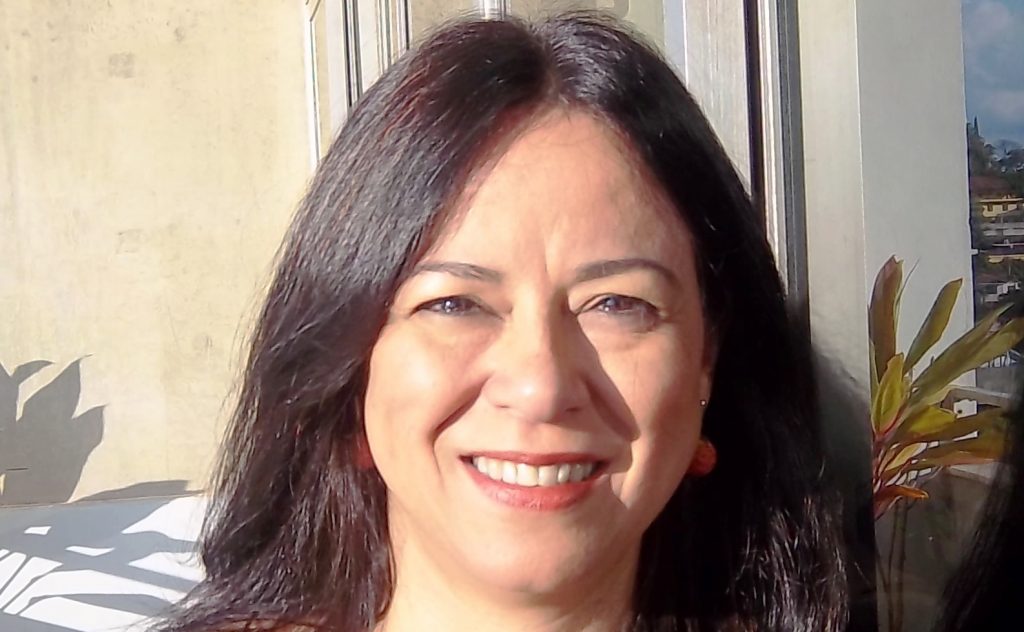
Alexandra Reis Moreira - foto

Alexandra Reis Moreira​

FD-ULisboa

She is a member of the Steering Committees of Empty Cages – Portuguese and Spanish Animal Law Association and Jus Animalium – Animal Law Association, being a co-founding member of both.
Member of the Advisory Committee of the Lisbon Animal Ombudsman.
She has been part of the coordinating and teaching staff of several Animal Law courses taught by the Faculty of Law of the University of Lisbon, namely the Postgraduate Course in Animal Law.
She has represented various animal protection associations in and out of court in cases of animal abuse and abandonment.
She was a member of the now defunct Study Office of the Bar Association, specializing in Animal Law.
Author and co-author of several publications on Animal Law topics, namely: Animals: Duties and Rights, Lisbon, ICJP – Faculty of Law of the University of Lisbon, 2015; Animal Law, Almedina, 2016; Applied Ethics – ANIMALS, Edições 70, 2018; Internal Security – Challenges in a Global Risk Society, Higher Institute of Police Sciences and Internal Security – Research Center, 2018.

Scientific advisory board

IMG-20210222-WA0019

Henrique Tereno

ICS-ULisboa

foto_cv

Clara Venâncio

ICS-ULisboa

Informações

  • Qualification certificate(s) (minimum requirement: bachelor's degree);
  • Curriculum Vitae;
  • Presentation letter, exposing the motivations to attend the course and the interest in the area;
  • The application is made on Fénix platform.

Candidates who meet the admission and application requirements at the end of the application period will be selected.

  • Propina: 600 € (4×150 €)
  • Application Tax: 50€
  • Registration Tax: 25€
  • The application tax is not refundable.
  • The evaluation of modules 1 to 8 is qualitative and based on student attendance. The minimum attendance requirement is 90%.
  • Module 9 is optional and is assessed quantitatively on a scale of 0 to 20. Assessment is based on the submission of a final essay with the following characteristics: between 5,000 and 7,000 words, in Portuguese or English, on one of the topics discussed during the course and covered in one or more modules.

Instituto de Ciências Sociais Av. Professor Aníbal de Bettencourt, 9 1600-189 LISBOA Portugal

animais.sociedade@humananimalstudies.net

SUPPORT

Scroll to top