CLAN – Children-Animals Friendships: challenging boundaries between humans and non-humans in contemporary societies

PTDC/SOC 28415/2017
PI: Verónica Policarpo | Co-PI: Ana Nunes de Almeida

What is project CLAN about?

Funded by the Portuguese Scientific Foundation (PTDC/SOC 28415/2017), this project aims at understanding the relationships between children and companion animals, by analyzing their affective practices, and discusses how these are intertwined with other practices, environments and contexts, such as those involved in taking care of a pet. Children and pets are considered as co-producers of a common world, where the boundaries of what is a child, and an animal, are built, and permanently reconfigured.

The project uses qualitative methods to explore these relationships and their affective dimensions, in the context of the household and parent-child interaction. Children will be given a voice (and heard) and asked to put themselves ‘in the shoes’ of their pets. Pets will be observed, in their relationship with children, and the natural and material world that surround them. The project also engages with relevant stakeholders related to both childhood and animal life: policy makers, teachers, psychologists, pediatricians, social workers, veterinarians and representatives of animal welfare associations.

The project will run for three years, beginning on 1st October 2018, with a team of eight researchers, and an external advisory panel of three international experts.


TEAM

Verónica_cut

Verónica Policarpo

PI (Principal Investigator)

With a PhD in Sociology, I am a social researcher in the field of Human-Animal Studies, at the Institute of Social Sciences of the University of Lisbon, where I coordinate the Human-Animal Studies Hub, since 2018. In 2022 I was awarded an ERC Consolidator Grant to study how animals recover from disasters, in particular wildfires. The ERC project ABIDE: Animal Abidings: recovering from Disasters in more-than-human communities,will run between 1 May 2023 and 30 April 2028.

Before that, I coordinated projects"Liminal Becomings: reframing human-animal relations in natural disasters". [CEECIND/02719/2017]",on animals in disasters; and"CLAN: Children-Animals' Friendships: challenging boundaries between humans and non-humans in contemporary societies (PTDC/SOC 28415/2017)", on children and companion animals. In all my projects, I am interested in the construction of a more-than-human approach in which all living beings are considered as full partners, with equivalent rights.

At ICS-ULisboa I also coordinate since 2020 the post-graduate course"Animais e Sociedade" ; the International Summer-School in Human Animal Studies (co-coordination with Malärden University, Sweden), since 2019; the Reading Group Animal Wonder, since 2018; and the webinar"The Post-Human-Animal".

At ICS, I also participate in the SHIFT Research Group (Environment, Territory and Society) and the LIFE Research Group (Life Course, Inequality and Solidarity: Practices and Policies).
foto-ana-site

Ana Nunes de Almeida

CO-PI (CO-PRINCIPAL  INVESTIGATOR)

Sociologist and a researcher at the ICS-ULisboa. Her favourite sicentific themes are: children and childhood, family and schooling, children and animals, new ethical dilemmas in the research with children. She is currently the chair of the Scientific Council at ICS-ULisboa and a member of the Directive Commitee of the RN04 Children and Childhood, European Sociological Asssociation).

foto-monica-site

Mónica Truniger

RESEARCHER ICS-ULisboa

Mónica is a sociologist at ICS-ULisboa. She has been dedicated to research, teaching and communication on social food practices through research on food poverty, sustainable food consumption and the eating habits of families with children. She has published several books on these topics with Portuguese and international publishers.

foto-teresa-site

Teresa Líbano Monteiro

Associate researcher at ICS-ULisboa

PhD in Sociology (ISCTE-IUL) (2007). She taught Sociological Theory and Methods of Research at the Faculty of Human Sciences of the Portuguese Catholic University (1993-2017). In 2013, she went to the Centre Max Weber (Lyon- France) to further developed Human-Animal Studies.

s200_vasco.ramos

Vasco Ramos

RESEARCHER ICS-ULisboa

Vasco Ramos (Lisbon, 1976), is a postdoctoral researcher, with a PhD in Sociology from the University of Lisbon. Among other interests, his research has focused on issues such as social inequality, class and mobility, and family sociology. More recently, he has focused on food, food practices and human-animal studies. Currently, he is a researcher at CLAN, conducting ethnographic work with children and pets, with interest in understanding how specific categorisations of non-human animals relate to food practices and preferences.

Since 2009 he has worked on several projects at ICS-UL, namely on a research project on family trajectories and social networks, coordinated by Karin Wall. Currently, he is part of the Life research group LIFE – Life Course, Inequality and Solidarities: Practices and Policies. He also collaborates with OFAP - Observatory of Families and Family Policies. As a postdoc researcher, he was part of the Portuguese team working on the ERC funded research project Families and Food in Hard Times. Since August 2017, he is developing a research project (based on an individual post-doctoral fellowship from the FCT) entitled Living with Uncertainty: Enduring Precariousness over the life course.

E8C845A0-43F5-401E-8181-353329E8D584-01

Joana Catela

Post-Doc RESEARCHER, ICS-ULisboa

Joana Catela studied Social Anthropology at FCSH-Nova and Latin American Studies at Cambridge University. Between 2010 and 2011 she attended the post-graduate course “Health anthropology: cultural competence in clinical setting”. After a year working for the local administration, in 2018 he received a doctorate in Anthropology from ISCTE-IUL with the thesis “On the margins and in transit: mental health and good intentions in an IPSS on the outskirts of Lisbon”, based on intensive ethnographic fieldwork in a social housing neighborhood.

Between 2018 and 2019, she joined ICS-ULisboa as a postdoctoral researcher working for project “exPERts - Organizing planning knowledge: housing policy and the role of experts in PER”. She developed a multisited ethnographic investigation both in Cascais and Alta de Lisboa with former residents of the former neighborhoods and with the experts involved in their relocation.

Between July 2020 and February 2021, Joana Catela worked for “SPLACH - Spatial Planning for Change”, based at ISCTE -IUL, a research project focused on investigating the Lisbon Metropolitan Area food system, for which she developed a remote ethnography about food basket producers.

She has recently joined ICS-ULisboa to work as a post-doc researcher for project “CLAN - Children-Animals Friendships: challenging boundaries between humans and non-humans in contemporary societies”.

Her main research interests focus on issues related to medical and urban anthropology, immigration, mental health, housing, vulnerability and human-animal studies, topics on which she has published and participated in scientific conferences, both nationally and internationally.

IMG-20210222-WA0019

Henrique Tereno

FCT PHD Student  ICS-ULisboa


Holds a bachelor’s degree in European Studies by the Faculty of Arts and Humanities of the University of Lisbon and a master’s degree in Anthropology by ISCTE/UTAD. Worked as a research assistant on the project CLAN - Children-Animal's Friendships: challenging boundaries between humans and non-humans in contemporary societies” in the Institute of Social Sciences. Is a member of the Human-Animal Studies Hub, partaking in its activities and collaborating in the organization of events. Favorite research topics focus on the relations between humans and non-human animals. Is currently a PhD FCT fellowship holder (2020.05345.BD) in the OpenSoc Doctoral program in Sociology, with a project on the categorization that children make of non-human animals through their practices. e está a desenvolver uma tese sobre a categorização que as crianças fazem dos animais com quem se relacionam através das suas práticas.

foto_cv

Clara Venâncio​

Research Assistant 


Clara Venâncio graduated in Communication Design from the University School of Arts of Coimbra and concluded the first curricular year of the MA in Sound and Image with a specialization in Computer Animation from the Catholic University of Portugal. She holds a Master's Degree in Product Design from the Superior School of Arts and Design of Caldas da Rainha where she completed the thesis “Animal Dignity - Development of Habitats for Domestic Animals” and the prototypes “Domus Petra” and “Locus Turi". She attended the Post-Graduate course Animals & Society at the Institute of Social Sciences of the University of Lisbon and currently works as a Research Assistant in the CLAN project. She is interested in the interactions between humans, animals, and objects. Mainly in which way objects condition and affect the actions of humans and animals.

Maria_ICS (1)

Maria Saari​

VISITING PHD RESEARCHER


Maria Helena Saari is a Postdoctoral Research Fellow at the Faculty of Education at the University of Oulu and Visiting Scholar at the Human-Animal Studies Hub. She is currently Co-Leader of the Envisioning Sustainability Research Hub of the Biodiverse Anthropocenes Research Program and Chair of the Finnish Critical Animal Studies Network (CASFinland). She was awarded the Senior Animal Law Researcher Award by the International Centre for Animal Law & Policy (ICALP) for her doctoral thesis "Animals as stakeholders in education: Towards an educational reform for interspecies sustainability". Her interdisciplinary research focuses on animals in education (policy and pedagogy), interspecies sustainability and justice, environmental education, and animal law. She coordinates and teaches undergraduate courses on environmental education and multispecies childhood studies. Prior to her research career, Maria worked in the field of education in teaching and leadership roles.

External advisors

jerome.michalon

Jérôme Michalon

Research Fellow in Sociology, at The French National Centre for Scientific Research. I’m currently working at the Triangle laboratory (UMR 5206 – University of Lyon). My research areas are human-animal relationships, science studies, sociology of mobilization, and sociology of health. My work consists in a sociological exploration of social dynamics within the “benevolence towards animals communities”. My PhD dissertation about Animal-Assisted Therapies as a social phenomenon has been published in 2014 (“Panser avec les animaux. Sociologie du soin par le contact animalier”, Presses de Mines, Paris). I try to understand how health care changes the social status of some animals (namely dogs and horses). I am also working on animal rights activism, and especially the links between advocacy and academia.

Harry Eckman​

Harry Eckman

Harry Eckman is an international animal welfare specialist with 25 years’ experience. He is CEO of the World Cetacean Alliance, the world’s largest marine conservation partnership.

Prior to his role at the WCA, Harry co-founded Change For Animals Foundation (CFAF) and acted as expert consultant for several animal welfare organisations including the International Fund for Animal Welfare (IFAW), Four Paws International and Dogs Trust. Throughout his career, Harry has worked internationally with hundreds of locally based animal protection groups. His work has included providing guidance and support on strategic thinking, planning and capacity development for animal welfare and conservation NGOs; stray animal population management; campaigning to end the dog and cat meat trades; lobbying to end wildlife in captivity and the illegal wildlife trade; incorporating human behaviour change concepts into animal welfare and conservation programs; and improving welfare standards in shelters and veterinary facilities.

Harry was born in London but lives in Portugal with his wife, 3 cats and a dog.

mara.miele

Mara Miele

Professor in Human Geography, Director of Postgraduate Research

School of Geography and Planning

DSCF5744

Melissa Nolas

Melissa Nolas teaches in the Department of Sociology at Goldsmiths, University of London. She is the co-director of the research programme Childhood Publics and of the Children’s Photography Archive. She also co-edits the online journal entanglements: experiments in multimodal ethnography. Her most recent research focuses on the relationship between childhood and public life, multimodal ethnography, and publics creating methodologies. Prior to this she spent a number of years critically researching welfare, well-being and social support for children, young people, and women/mothers.

CLAN Conference

Friendship between children and animals

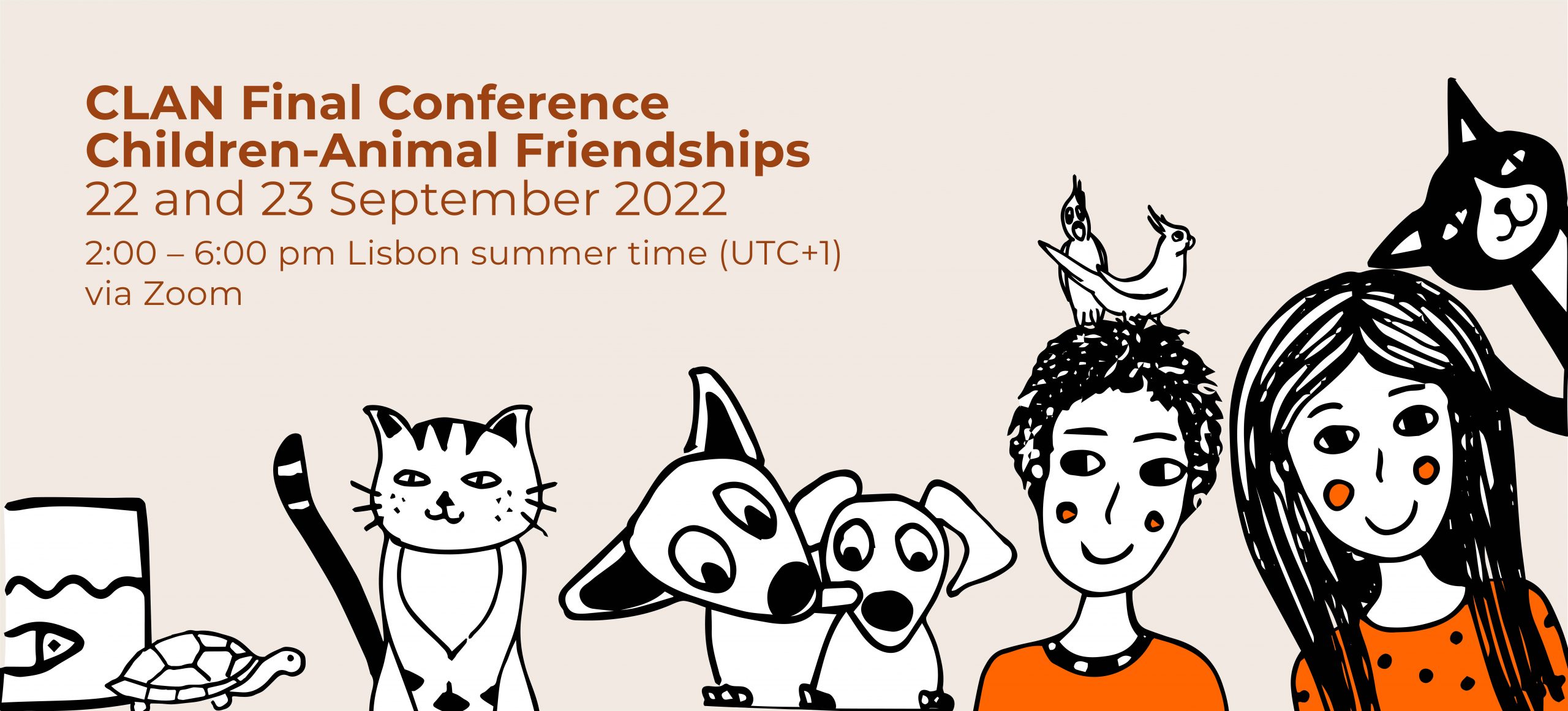
The CLAN International Conference took place on September 22 and 23, 2022. This conference brought together invited experts in the field and researchers involved in the project to discuss the topic. On the first day, we delved into the theoretical reasoning behind the specificities of child-animal relationships and their status in the field. We also presented some of our results, putting them into perspective with the state of the art.

On the second day, we addressed one of the most important dimensions of the project: how to go beyond academia and reach wider audiences of all ages and backgrounds. We discussed how to engage and give back to participants. And how art and science can work together to communicate a multispecies, more-than-human approach that can have an impact on the well-being of children, animals, and families.

CLAN Outreach Ecosystem

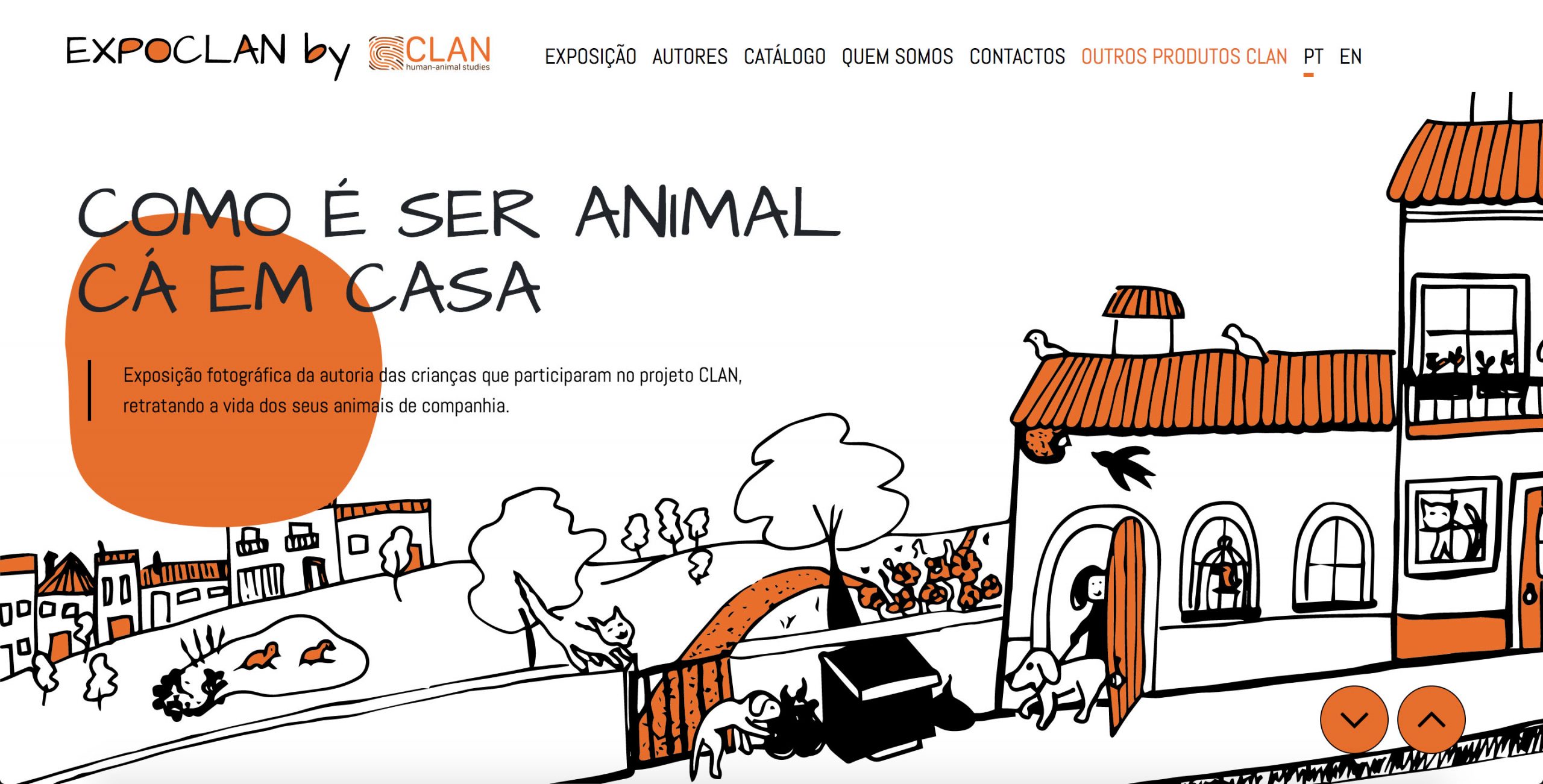
EXPOCLAN

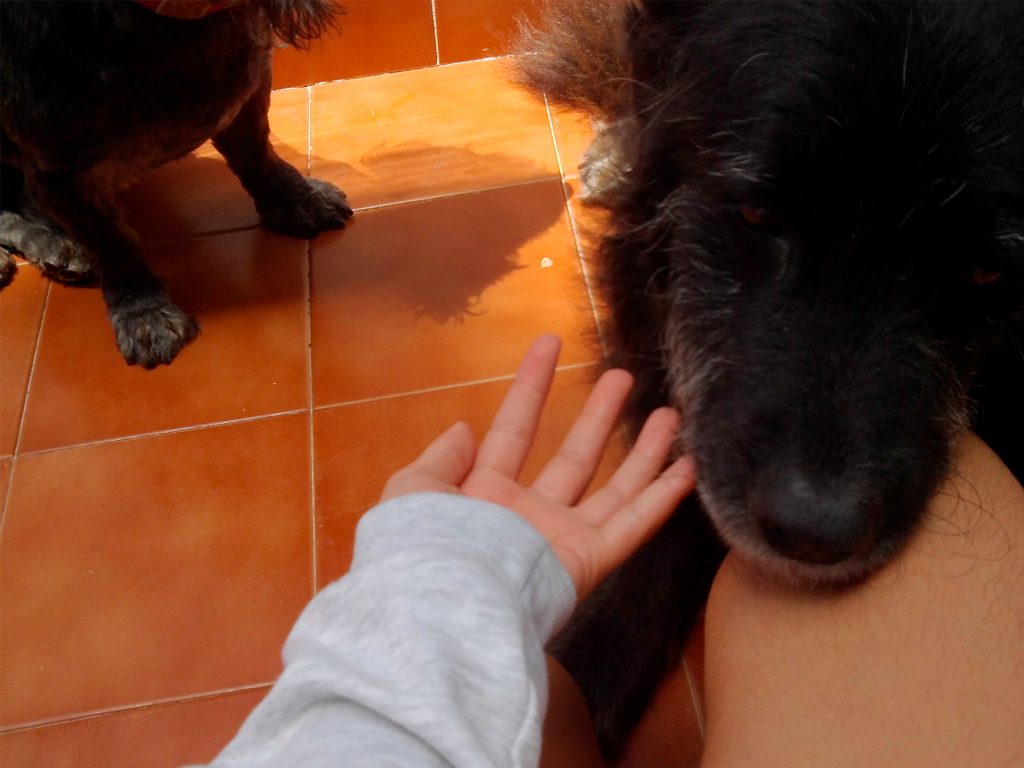
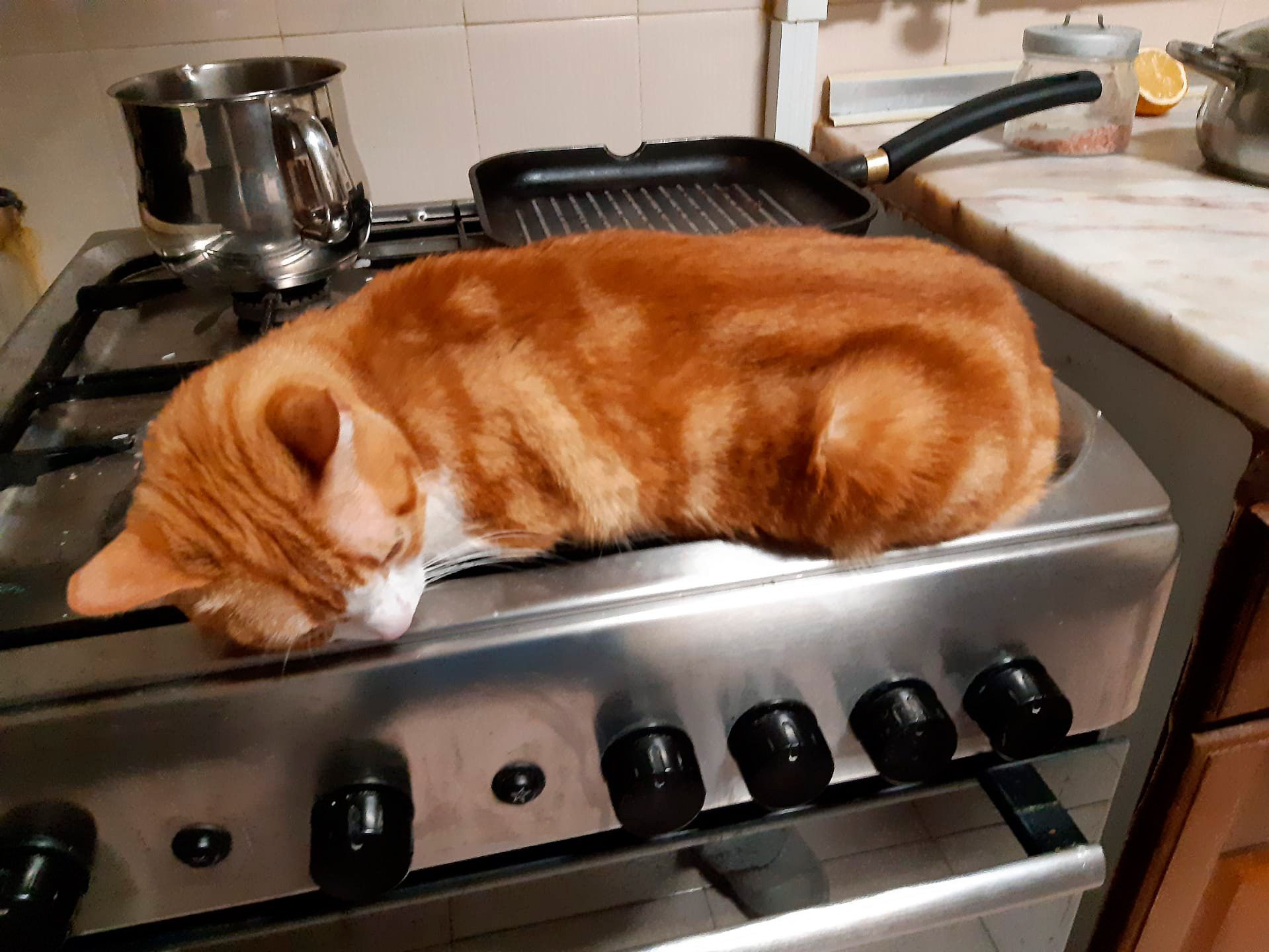
We photographed what it's like to be an animal here at home.

What is life like for a pet in a Portuguese family? Can children put themselves in the animal's shoes and see the world from its perspective? For two weeks, children participating in CLAN – Child-Animal Friendships – photographed the daily lives of the animals with whom they share their lives and play. EXPOCLAN is an online photo exhibition featuring photographs taken by children who participated in the CLAN project.

Target Audience: Children and adults from all ages; educators.

Website: https://www.expoclan.pt

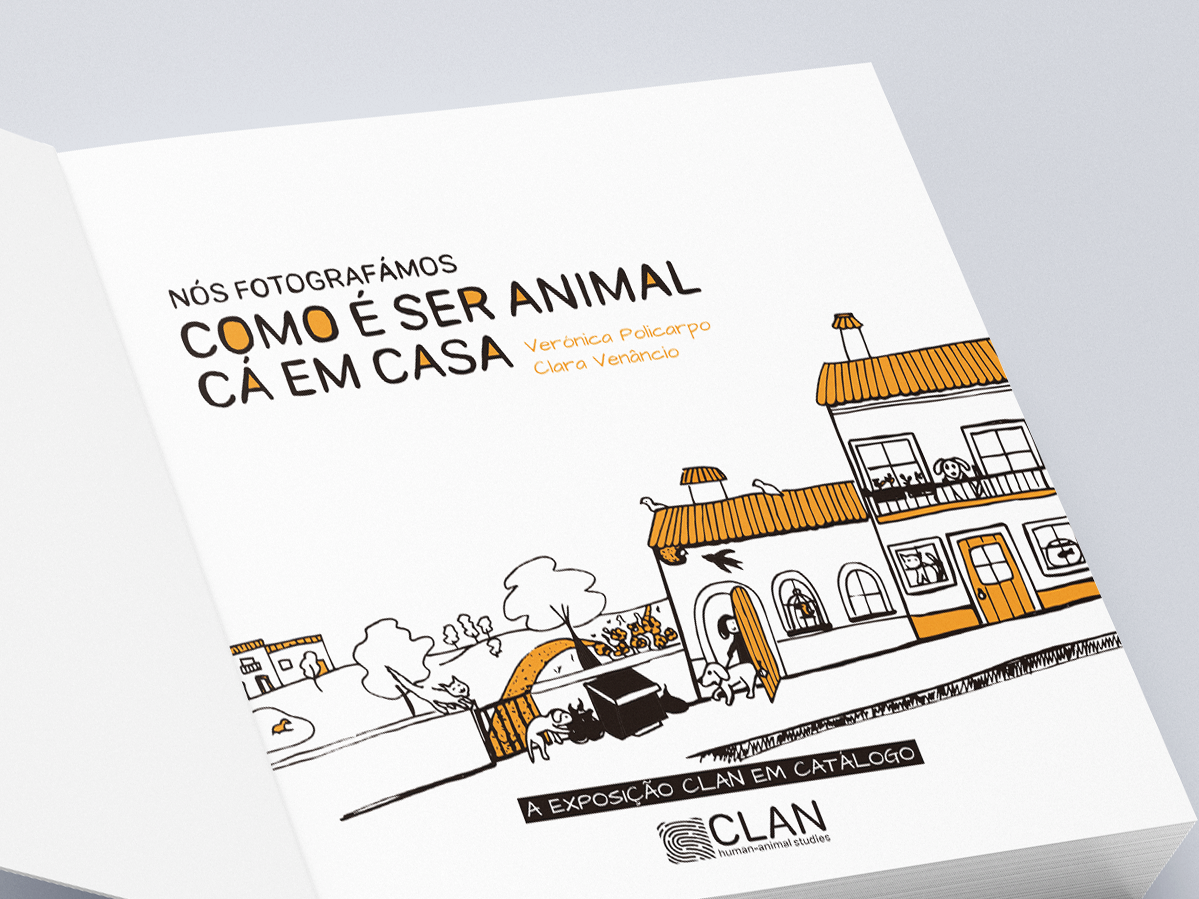
CLAN Catalogue

We photographed what it's like to be an animal here at home.

The CLAN photography exhibition catalog aims to convert visual materials into book format to facilitate their use and dissemination.

Catalogue https://www.expoclan.pt/wp-content/uploads/2022/09/EXPOCLAN-CATALOGO-2022.pdf

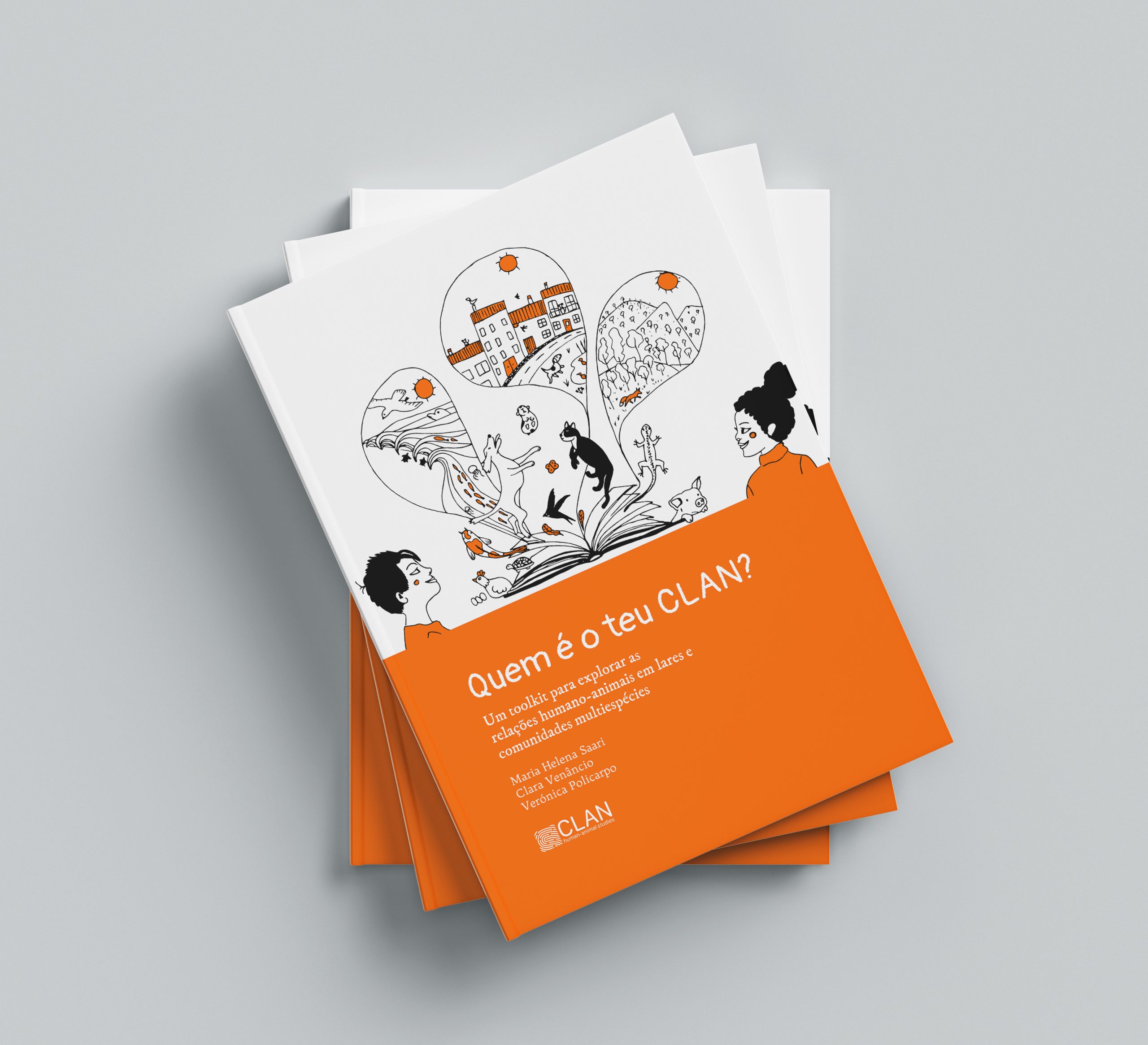
Toolkit CLAN

How can we explore our multispecies homes and communities and the diverse relationships between humans and animals in schools?

Our toolkit “Who is your CLAN?” includes different activities that seek to explore the emotional life of animals, communication and body language, the habits and routines of companion animals, friendships and curious encounters with animals, animal shelters and wildlife, and what provides a safe and happy environment for animals. These topics are explored through storytelling, role-playing games, and other creative activities.

Toolkit: https://www.expoclan.pt/en/other-clan-products/toolkit/

CLAN Movie

As Crianças e Animais de Companhia: Cuidados, amor e luto em famílias multiespécies, por Just Wondering 

This film, created from the results and reflections generated by CLAN, explores the relationships between children and companion animals, focusing on specific points of tension such as multispecies care, family dynamics, loss, grief, and death.

Movie: https://www.expoclan.pt/outros-produtos-clan/filme-clan/

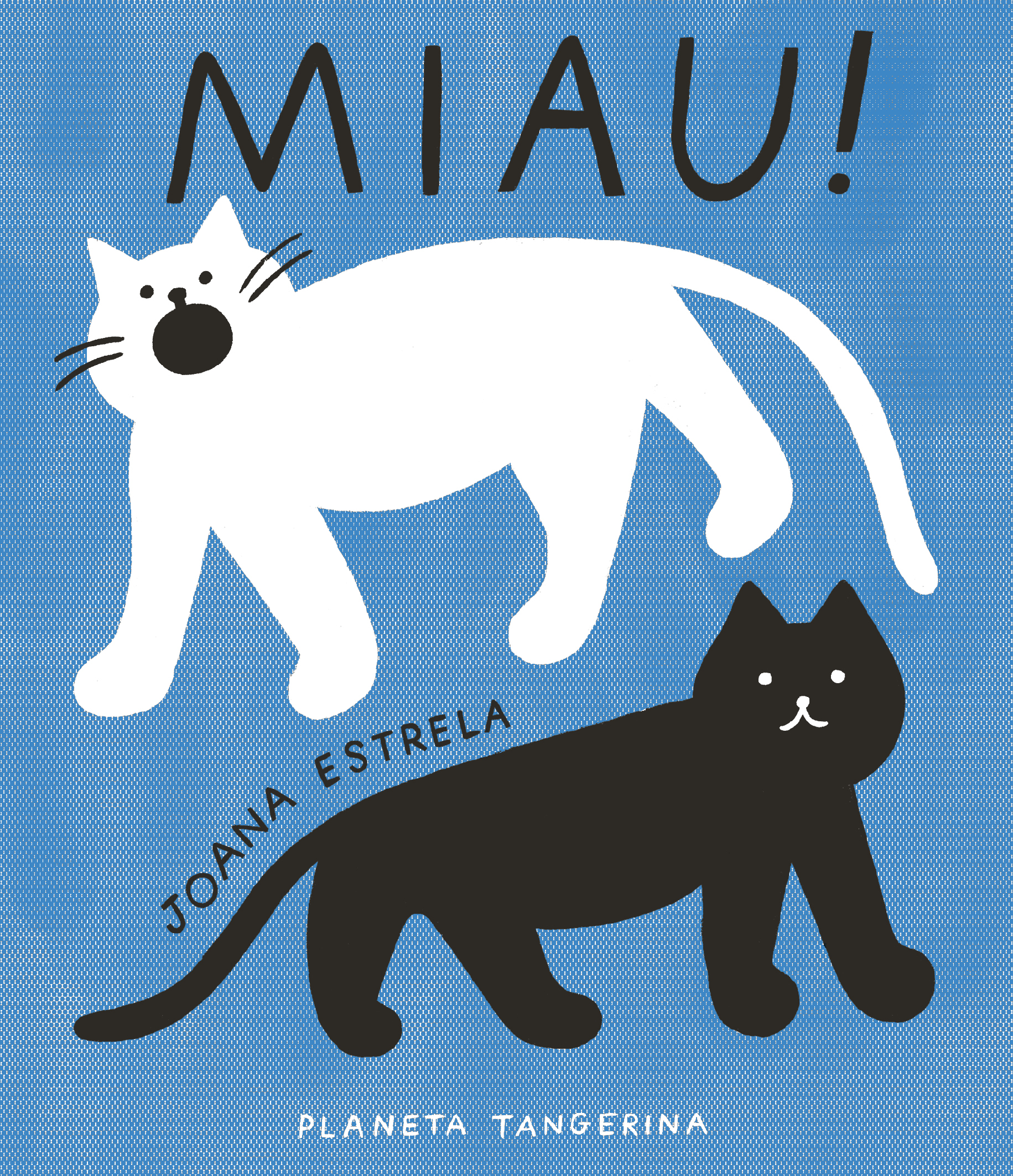
Children Book: MIAU!

About the life of two cats and a girl, by illustrator Joana Estrela

This children's book was born out of a collaboration between the results and reflections of the CLAN project and the creative contribution of author and illustrator Joana Estrela. The book tells the story of a day in the life of two cats and a child, told from the cats' point of view. This book is suitable for preschool children, as it has no dialogue, only drawings and simple text (such as onomatopoeia).

CLAN Short Story

All the Animals, by Becky Tipper

This short story tells the tale of what it is like to be a pet in a Portuguese family.

Scroll to top